Mike Meetz and Sam Wormley team up to provide a lively
discussion with OLLI members about science in the news. A
deep understanding of science is not required to share and
discuss recent Science in the News. Past Classes.
⓵ In an $80 Motel Room, a Discovery to Shed Light on the Origins of Life - The New York Times
https://www.nytimes.com/2026/09/26/science/motel-science-discovery.html
https://onlinelibrary.wiley.com/doi/10.1111/jpy.70230?af=R
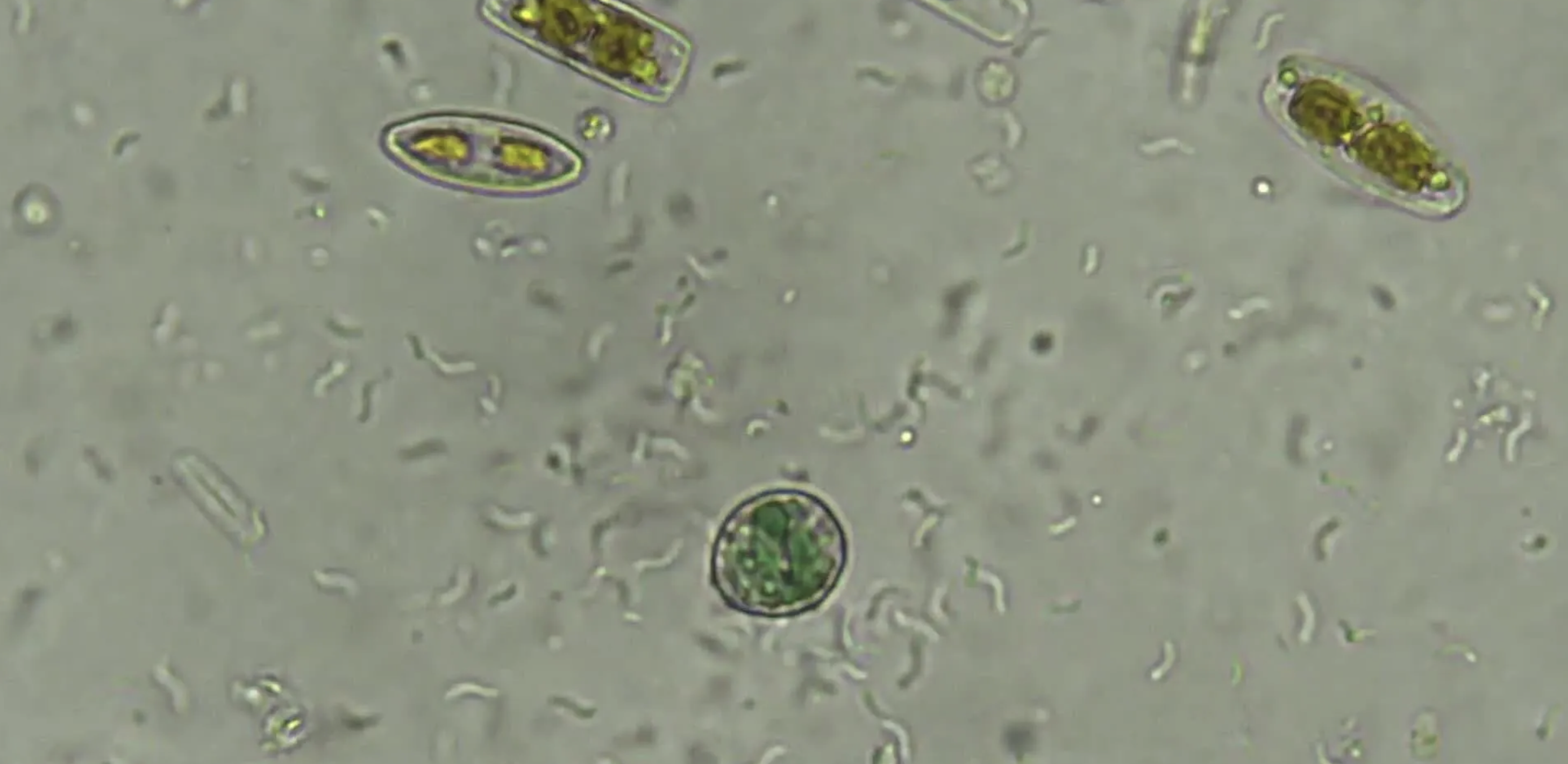
Dr. Julia Van Etten and colleagues identified two new
Paulinella species in a Nags Head motel lab, raising known
photosynthetic species to six.
 On a spring day last year, Andrew Willoughby drove three and
a half hours to a cheap motel in Nags Head, N.C. From the
parking lot, he texted a stranger he had met online.
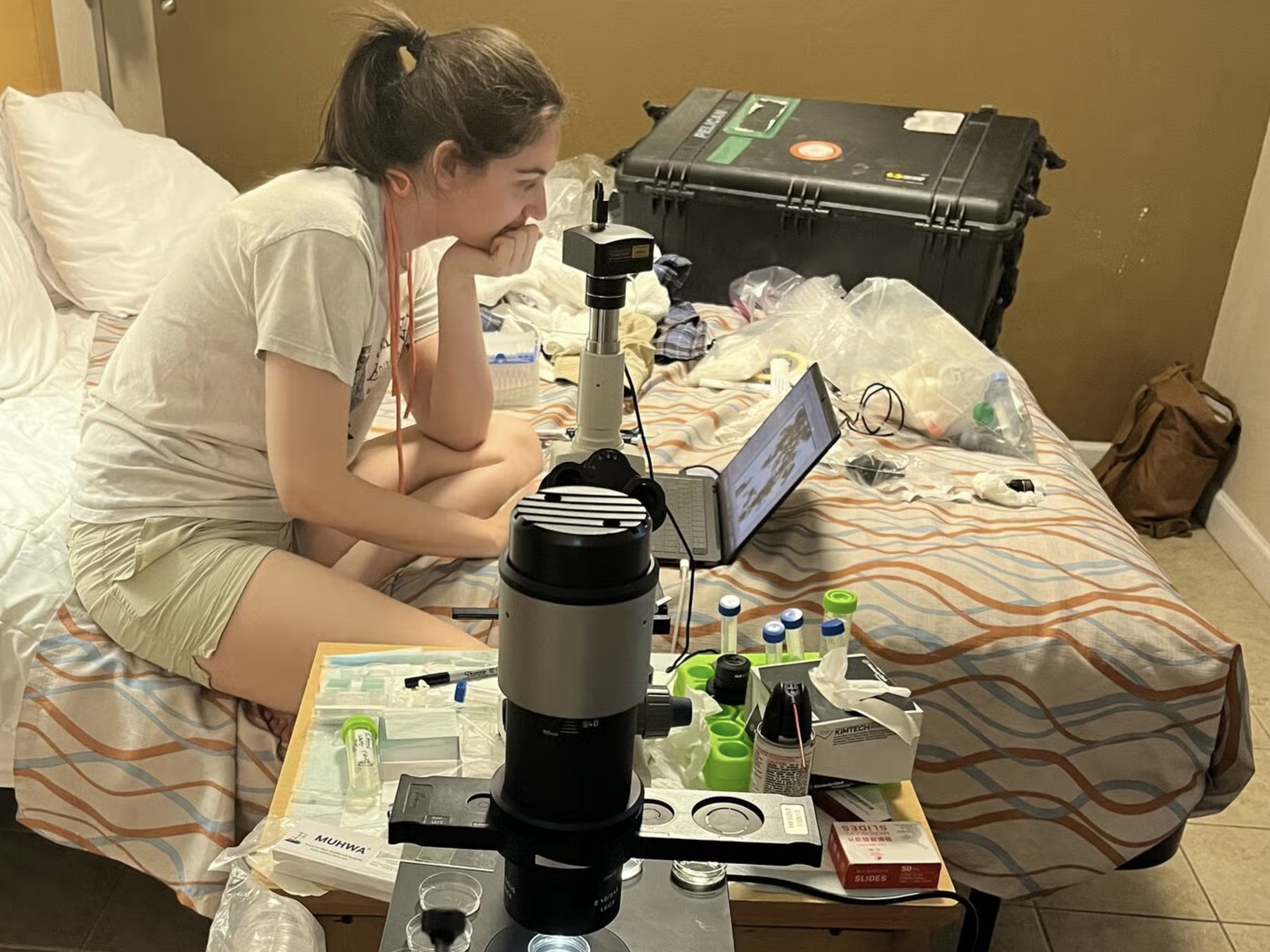
Julia Van Etten appeared, ushering him past a "Do Not
Disturb" sign into one of the motel's $80 rooms, which she
had secretly turned into a makeshift lab. Jugs of brackish
water lined the walls. Buckets overflowed with hunks of
marsh grass. Bedside tables served as microscope stands. "Oh
my god, these people are legit," Dr. Willoughby, a biologist
who studies plant genomes, thought to himself as he found a
spot to sit on the corner of the bed.
Over the next few days, a small group of scientists led by
Dr. Van Etten, an evolutionary biologist, scoured drops of
water for swamp algae. The team — brought together, in part,
by disruptions and despair over the Trump administration's
freezes to federal science funding - then made an exciting
discovery.
 Related: How Did Life Begin on Earth?
http://edu-observatory.org/olli/42/Week4.html
⓶ Surprising result seen in primordial matter inside atom smasher | Scientific American
https://www.scientificamerican.com/article/surprising-result-seen-in-primordial-matter-inside-atom-smasher/
After 20 years, jet diffusion wakes detected in quark-gluon plasmas
https://phys.org/news/2026-09-years-jet-diffusion-quark-gluon.html
When the universe was born, space was too hot and dense for
atoms to exist. Even the constituents of atoms—the protons
and neutrons that make up atomic nuclei—couldn’t immediately
coalesce. Instead the newborn cosmos was filled with even
smaller and more fundamental building blocks, quarks and
gluons, which formed a smoothly flowing soup called
quark-gluon plasma.
Soon, though, the universe expanded, cooling down the soup.
Gluons glued quarks together to make protons and neutrons,
which floated around as a gas rather than a plasma. The
change marked a phase transition, just as water can switch
from vapor to liquid to solid ice. But key details of this
profound primordial transition, such as its threshold energy
and density, have remained deeply mysterious.
That began to change around the turn of the millennium, when
physicists started smashing gold ions together at nearly the
speed of light inside the giant particle accelerator at
Brookhaven National Laboratory on Long Island in New York
State. Those smashups were so powerful that they briefly
re-created the quark-gluon plasma from the big bang. Now
researchers analyzing data from those collisions have seen
an unexpected signal that offers new clues about how the
cosmic transition happened eons ago.
⓷ Great News From Enceladus: Saturn's Icy Moon Just Became Even More Promising for Life
https://scitechdaily.com/great-news-from-enceladus-saturns-icy-moon-just-became-even-more-promising-for-life/
Saturn’s icy moon hides a global ocean beneath its frozen
surface, but researchers do not necessarily need to drill
through kilometers of ice to study it. Powerful plumes erupt
from fractures near the south pole, carrying water vapor and
frozen material from the ocean hundreds of kilometers
(hundreds of miles) above the surface, where spacecraft can
sample it directly.
Now, two studies published in Science Advances suggest that
Enceladus may be even more favorable for the search for life
than previously understood. One shows that the process
creating its plume particles naturally separates and
concentrates chemicals from the ocean. The other
demonstrates that a methane-producing microorganism from
Earth can remain active under laboratory conditions designed
to resemble the moon’s unusual chemistry.
An Ocean That Comes to the Spacecraft
Enceladus has become one of the leading places to
investigate potentially habitable environments beyond Earth.
Although its surface is frozen, gravitational interactions
within the Saturn system generate internal heating that
helps keep water liquid beneath the crust. That ocean is
thought to lie above a rocky interior, creating
opportunities for water and rock to interact.
⓸ These smart bricks know what object they make up | Scientific American
https://www.scientificamerican.com/article/these-smart-bricks-know-what-object-they-make-up/
In a recent experiment, researchers created a set of virtual
cubes, each cube with its own individual neural network. The
virtual cubes were then assembled with thousands others into
nearly 500 shapes in seven categories -boats, cars, chairs,
guitars, houses, planes and tables. And each cube contained
a list of numbers called a vector that amounted to a guess
about which shape they were a part of, and that guess could
evolve over time.
Each cube's neural network told it how to update its vector
based on its neighbors'. After the neural network was
trained on local information, the cubes could guess what
shape they were with 85-100 percent accuracy. When they
tested the neural network with real blocks, up to 197 blocks
were able to accurately identify what object they were
assembled into 100 percent of the time.
Possible applications: The long-term idea behind this
technology is to bring us closer to self-healing circuits,
computers that can assess and repair damage as it happens or
maybe even modular robots that assemble themselves, no
instruction manual required. For now, the most direct
application is edutainment: build a dinosaur that then
roars.
What the experts say: A future in which machines build
themselves is "all about local self-organization where you
don't have one failure point," says Sebastian Risi, the
paper's senior author and a computer scientist at IT
University of Copenhagen and Sakana Al.
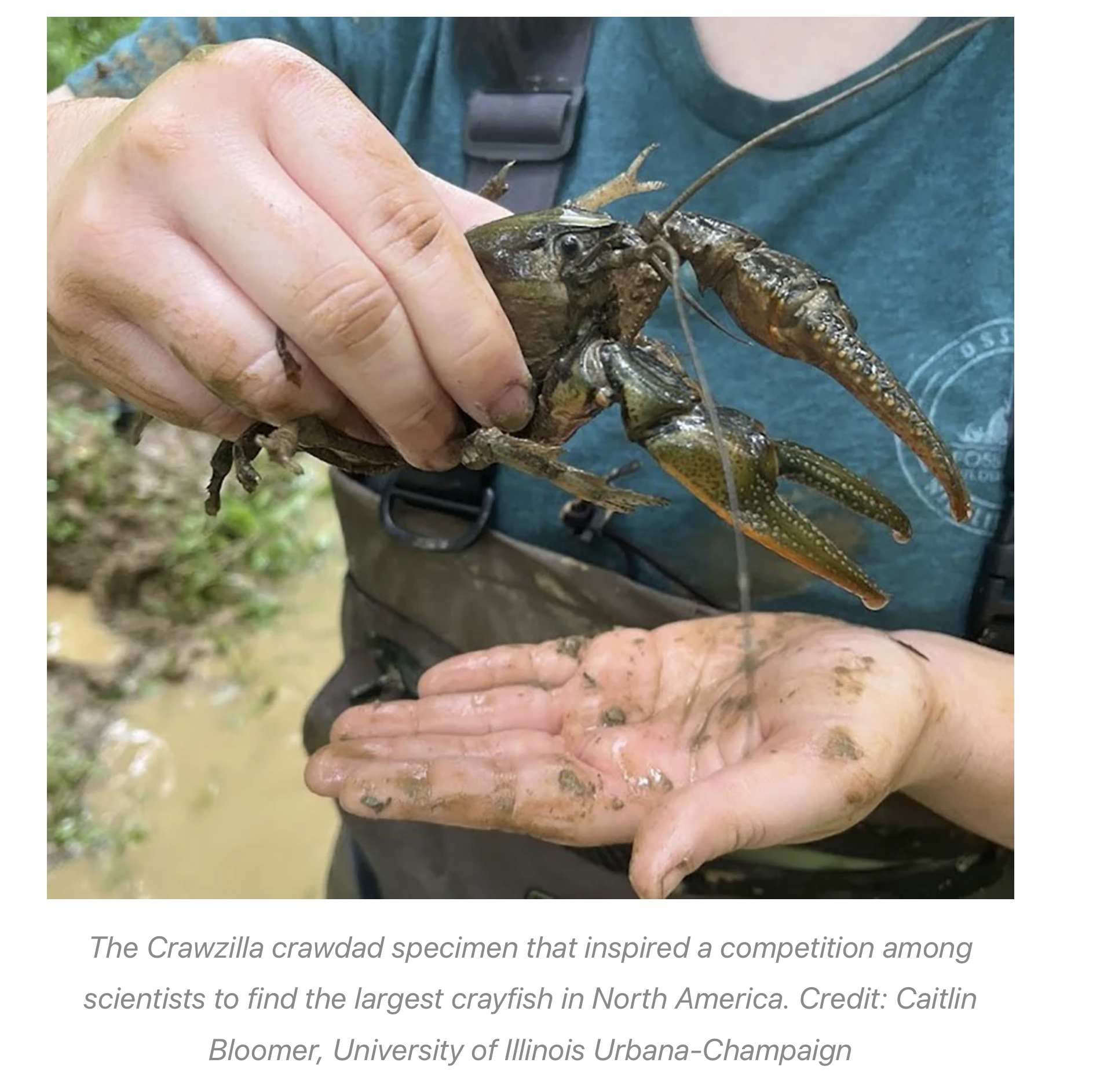
⓹ Scientists Just Found North America's Biggest Known Crayfish
https://scitechdaily.com/crawzilla-scientists-just-found-north-americas-biggest-known-crayfish/
 ⓺ End of humanity? Blow-by-blow account of what would happen if the Yellowstone supervolcano erupted now
https://phys.org/news/2026-09-humanity-blowbyblow-account-yellowstone-supervolcano.html
Around 631,000 years ago-a geological blink of an
eye-catastrophe unfolded in what is now northwestern Wyoming,
U.S. During what is thought to have been a series of immense
volcanic eruptions, life within hundreds of kilometers of the
blasts was shattered. Ash was dispersed across much of North
America, and the effects were felt worldwide. This was a
super-eruption of the massive volcanic system located in what
is now Yellowstone National Park.
Despite the scale, no known human witnessed the cataclysm. As
far as we know, early humans had not yet reached the
continent. Across oceans, perhaps early humans wondered at
the hazier skies and unusually vivid sunsets. Volcanic
particles circulating in the sky cooled their climate and
likely affected their weather patterns and lives. Whether
they noted these changes-or connected them to any distant
event-is unknowable.
Today, humanity would certainly notice. We already know that
a super-eruption on this scale would threaten civilization as
we know it. So what exactly would we experience if
Yellowstone erupted? We are experts in disasters and
volcanoes, and what follows is a thought experiment into what
might happen in the worst-case scenario. We've based our
hypothesis on research and an examination of how countries
have dealt with disasters in recent years.
Related Material from some recent OLLI cources
http://edu-observatory.org/olli/classes.html
Alan Lightman On Richard Feynman's Amazing Mind, Or How
"Hawking Radiation" Could Well Be "Feynman Radiation" (6+ min)
https://player.vimeo.com/video/104516539
https://phys.org/news/2026-09-years-jet-diffusion-quark-gluon.html
sam.wormley@icloud.com